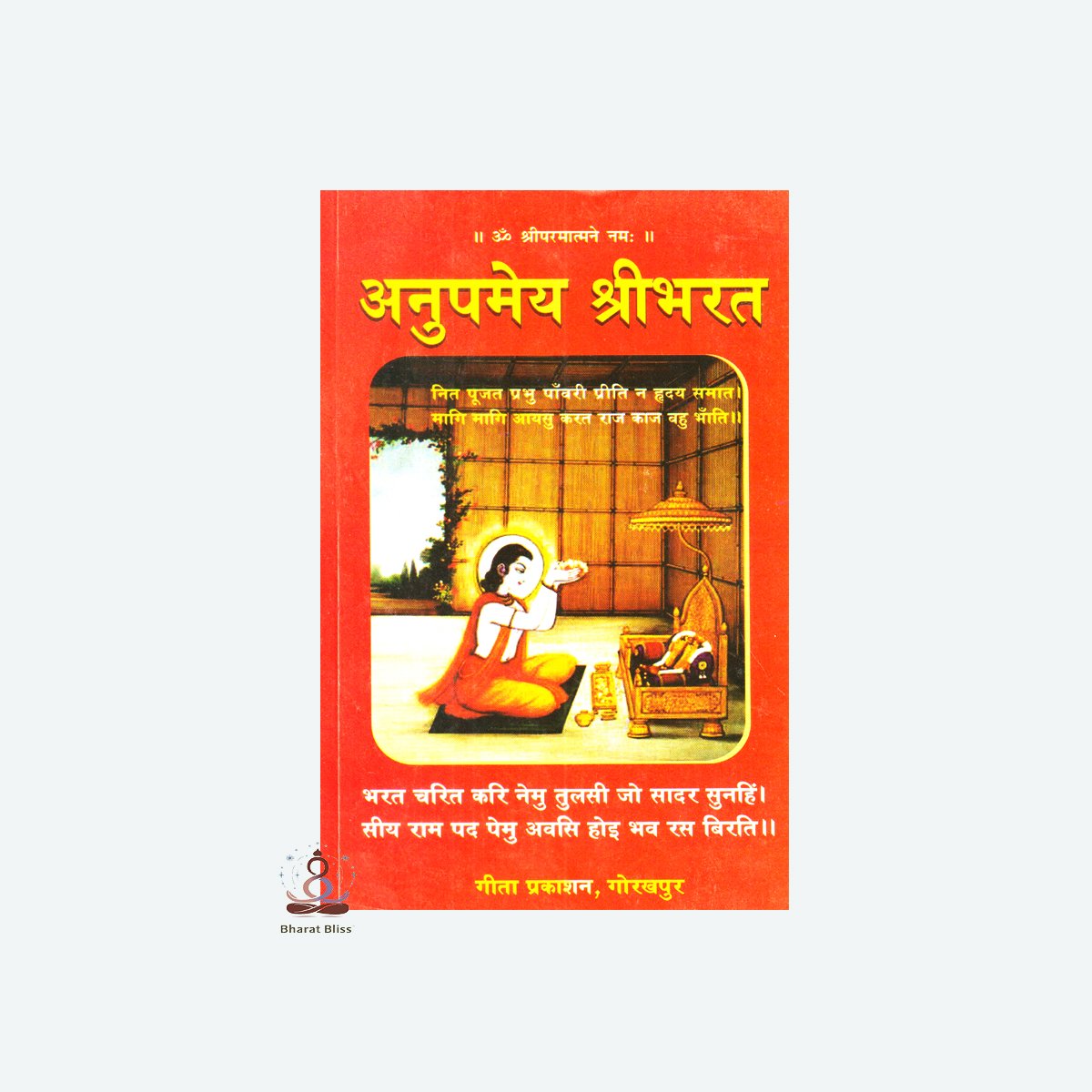

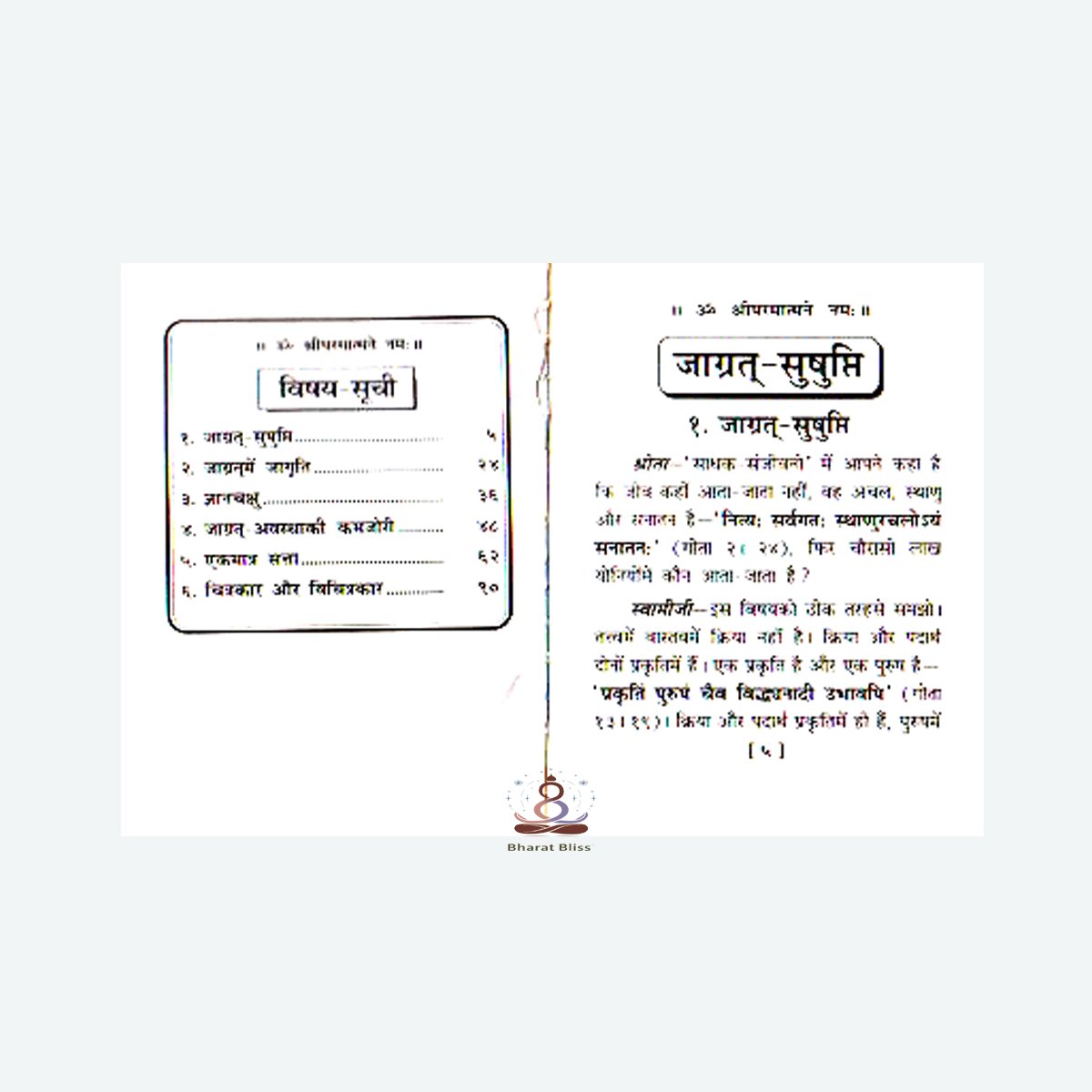
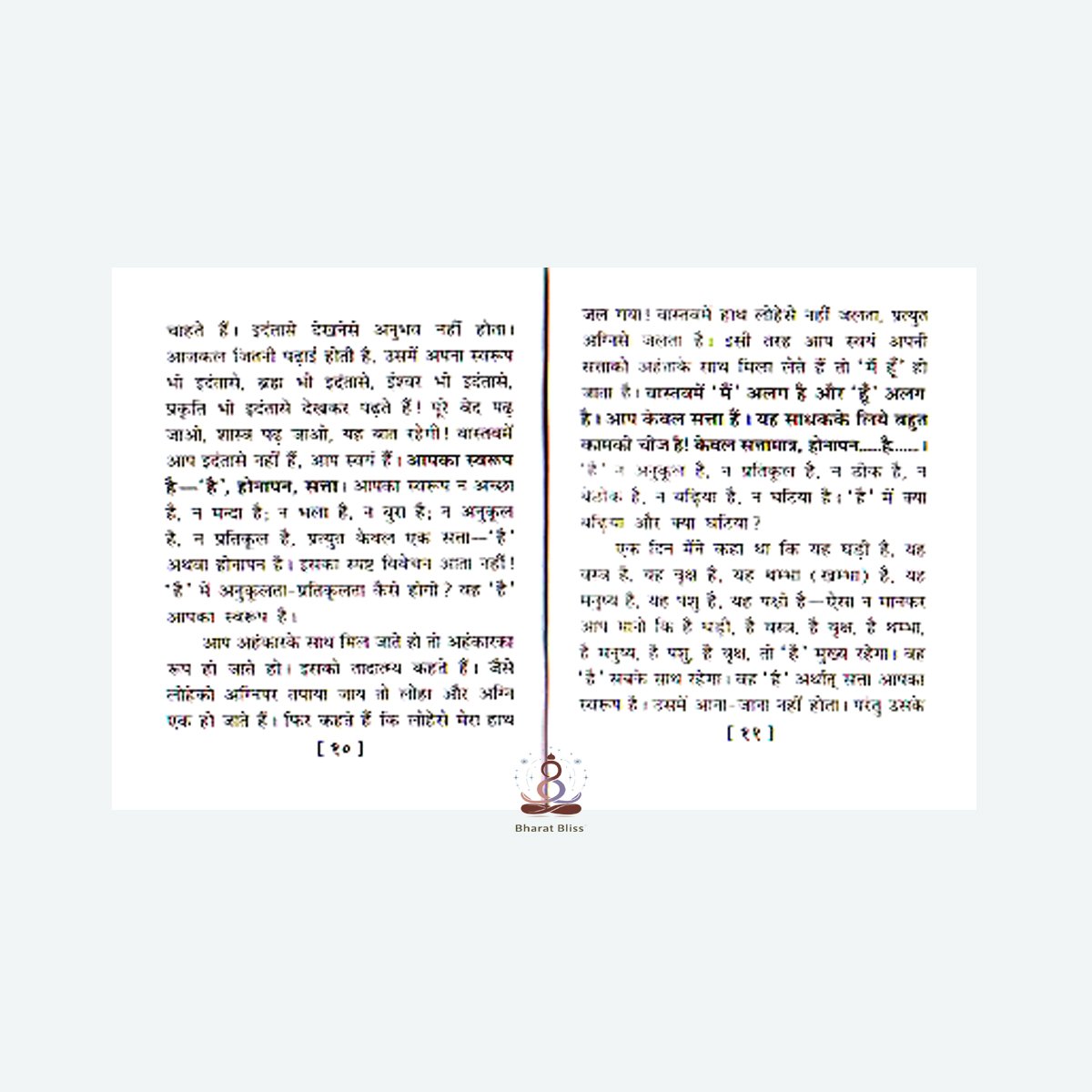
जाग्रत-सुषुप्ति / Jagrat Sushupt

30.00

In Indian philosophy, particularly in Advaita Vedanta and the Mandukya Upanishad, consciousness is analyzed through different states of experience. Jagrat and Sushupti represent two distinct yet interconnected levels of human awareness. 
1. Jagrat (The Waking State)
This is the state of consciousness we experience while we are awake and interacting with the world. 
  • Outward-Facing: Consciousness is focused on external objects through the five senses.
  • Gross Experience: It involves the physical body (Sthoola Sharira) and the perception of gross material reality.
  • Identification: In this state, the individual soul (known as Vishwa in this phase) identifies strongly with the physical body and the ego. 
2. Sushupti (The Deep Sleep State)
This is the state of dreamless, profound sleep. 
  • Inward-Focused/Stillness: The mind and senses are withdrawn; there are no external perceptions or internal dreams.
  • State of Bliss: It is described as a state of undifferentiated stillness where the distinction between the “knower” and the “known” dissolves. Because it is free from the agitations of desires and thoughts, it is often called a state of “negative bliss”.
  • Causal Body: The individual identifies with the causal body (Karana Sharira) and is referred to as Prajna (the Wise One) because all experiences are resolved into their potential form. 
3. Jagrat-Sushupti (Wakeful Sleep)
In higher spiritual contexts, particularly the teachings of Ramana Maharshi,Jagrat-Sushupti” refers to a special yogic state known as Samadhi or Liberation. 
  • Definition: It is a state where one is “awake” to the Self (Jagrat) but “asleep” to the external world of multiplicity (Sushupti).
  • Enlightenment: The person remains fully aware and conscious but maintains the deep, thought-free stillness of sleep. This is considered the mark of a Jnani (enlightened sage) who acts in the world while remaining internally unperturbed
 यह मनुष्य के अस्तित्व और मन की विभिन्न स्थितियों को दर्शाते हैं। 
इनका संक्षिप्त विवरण नीचे दिया गया है:
1. जाग्रत अवस्था (Waking State)
यह वह अवस्था है जिसमें हम वर्तमान में जी रहे हैं और बाहरी दुनिया से जुड़े हुए हैं। 
  • इंद्रियों की सक्रियता: इस अवस्था में हमारी दसों इंद्रियाँ (पाँच ज्ञानेंद्रियाँ और पाँच कर्मेंद्रियाँ) सक्रिय रहती हैं और बाहरी विषयों का अनुभव करती हैं।
  • बाहरी जगत का ज्ञान: व्यक्ति अपने शरीर और आस-पास के वातावरण के प्रति पूर्णतः सचेत रहता है।
  • अहंकार: इस अवस्था में व्यक्ति खुद को शरीर और कर्ता (Doer) मानता है। 
2. सुषुप्ति अवस्था (Deep Sleep State)
यह वह अवस्था है जिसे हम ‘गाढ़ निद्रा’ या ‘गहरी नींद’ कहते हैं, जहाँ कोई स्वप्न नहीं होता। 
  • मन का लय: सुषुप्ति में मन और बुद्धि पूरी तरह से शांत होकर अपने कारण (अज्ञान या कारण शरीर) में लीन हो जाते हैं।
  • द्वंद्व का अभाव: यहाँ न कोई इच्छा होती है, न कोई विचार और न ही कोई दुख-सुख का अनुभव। यह परम शांति की स्थिति है।
  • अद्वैत अनुभव: इस अवस्था में ज्ञाता और ज्ञेय (जानने वाला और जो जाना जा रहा है) का भेद मिट जाता है, जिससे व्यक्ति को एक प्रकार के ‘आनंद’ का अनुभव होता है (इसीलिए जागने पर हम कहते हैं कि “मैं बहुत सुख से सोया”)। 
जाग्रत-सुषुप्ति: एक विशेष योगिक अवस्था
अध्यात्म में कभी-कभी “जाग्रत-सुषुप्ति” शब्द का प्रयोग जागृत निद्रा (Wakeful Sleep) के लिए भी किया जाता है, जिसे रमण महर्षि जैसे संतों ने समझाया है: 
  • इसका अर्थ है – जाग्रत अवस्था की तरह ‘पूर्ण सजग’ रहना, लेकिन भीतर से सुषुप्ति की तरह ‘परम शांत और विचारशून्य’ बने रहना।
  • यह अवस्था वास्तव में तुरीय (चौथी अवस्था) की ओर ले जाती है, जहाँ व्यक्ति संसार में कर्म करते हुए भी भीतर से निर्लिप्त रहता है। 
सरल शब्दों में, जाग्रत बाहरी दुनिया का ज्ञान है और सुषुप्ति आंतरिक शांति की वह स्थिति है जहाँ संसार लुप्त हो जाता है

Description

In Indian philosophy, particularly in Advaita Vedanta and the Mandukya Upanishad, consciousness is analyzed through different states of experience. Jagrat and Sushupti represent two distinct yet interconnected levels of human awareness. 
1. Jagrat (The Waking State)
This is the state of consciousness we experience while we are awake and interacting with the world. 
  • Outward-Facing: Consciousness is focused on external objects through the five senses.
  • Gross Experience: It involves the physical body (Sthoola Sharira) and the perception of gross material reality.
  • Identification: In this state, the individual soul (known as Vishwa in this phase) identifies strongly with the physical body and the ego. 
2. Sushupti (The Deep Sleep State)
This is the state of dreamless, profound sleep. 
  • Inward-Focused/Stillness: The mind and senses are withdrawn; there are no external perceptions or internal dreams.
  • State of Bliss: It is described as a state of undifferentiated stillness where the distinction between the “knower” and the “known” dissolves. Because it is free from the agitations of desires and thoughts, it is often called a state of “negative bliss”.
  • Causal Body: The individual identifies with the causal body (Karana Sharira) and is referred to as Prajna (the Wise One) because all experiences are resolved into their potential form. 
3. Jagrat-Sushupti (Wakeful Sleep)
In higher spiritual contexts, particularly the teachings of Ramana Maharshi,Jagrat-Sushupti” refers to a special yogic state known as Samadhi or Liberation. 
  • Definition: It is a state where one is “awake” to the Self (Jagrat) but “asleep” to the external world of multiplicity (Sushupti).
  • Enlightenment: The person remains fully aware and conscious but maintains the deep, thought-free stillness of sleep. This is considered the mark of a Jnani (enlightened sage) who acts in the world while remaining internally unperturbed
 यह मनुष्य के अस्तित्व और मन की विभिन्न स्थितियों को दर्शाते हैं। 
इनका संक्षिप्त विवरण नीचे दिया गया है:
1. जाग्रत अवस्था (Waking State)
यह वह अवस्था है जिसमें हम वर्तमान में जी रहे हैं और बाहरी दुनिया से जुड़े हुए हैं। 
  • इंद्रियों की सक्रियता: इस अवस्था में हमारी दसों इंद्रियाँ (पाँच ज्ञानेंद्रियाँ और पाँच कर्मेंद्रियाँ) सक्रिय रहती हैं और बाहरी विषयों का अनुभव करती हैं।
  • बाहरी जगत का ज्ञान: व्यक्ति अपने शरीर और आस-पास के वातावरण के प्रति पूर्णतः सचेत रहता है।
  • अहंकार: इस अवस्था में व्यक्ति खुद को शरीर और कर्ता (Doer) मानता है। 
2. सुषुप्ति अवस्था (Deep Sleep State)
यह वह अवस्था है जिसे हम ‘गाढ़ निद्रा’ या ‘गहरी नींद’ कहते हैं, जहाँ कोई स्वप्न नहीं होता। 
  • मन का लय: सुषुप्ति में मन और बुद्धि पूरी तरह से शांत होकर अपने कारण (अज्ञान या कारण शरीर) में लीन हो जाते हैं।
  • द्वंद्व का अभाव: यहाँ न कोई इच्छा होती है, न कोई विचार और न ही कोई दुख-सुख का अनुभव। यह परम शांति की स्थिति है।
  • अद्वैत अनुभव: इस अवस्था में ज्ञाता और ज्ञेय (जानने वाला और जो जाना जा रहा है) का भेद मिट जाता है, जिससे व्यक्ति को एक प्रकार के ‘आनंद’ का अनुभव होता है (इसीलिए जागने पर हम कहते हैं कि “मैं बहुत सुख से सोया”)। 
जाग्रत-सुषुप्ति: एक विशेष योगिक अवस्था
अध्यात्म में कभी-कभी “जाग्रत-सुषुप्ति” शब्द का प्रयोग जागृत निद्रा (Wakeful Sleep) के लिए भी किया जाता है, जिसे रमण महर्षि जैसे संतों ने समझाया है: 
  • इसका अर्थ है – जाग्रत अवस्था की तरह ‘पूर्ण सजग’ रहना, लेकिन भीतर से सुषुप्ति की तरह ‘परम शांत और विचारशून्य’ बने रहना।
  • यह अवस्था वास्तव में तुरीय (चौथी अवस्था) की ओर ले जाती है, जहाँ व्यक्ति संसार में कर्म करते हुए भी भीतर से निर्लिप्त रहता है। 
सरल शब्दों में, जाग्रत बाहरी दुनिया का ज्ञान है और सुषुप्ति आंतरिक शांति की वह स्थिति है जहाँ संसार लुप्त हो जाता है

Reviews

There are no reviews yet.

Only logged in customers who have purchased this product may leave a review.
Related products